
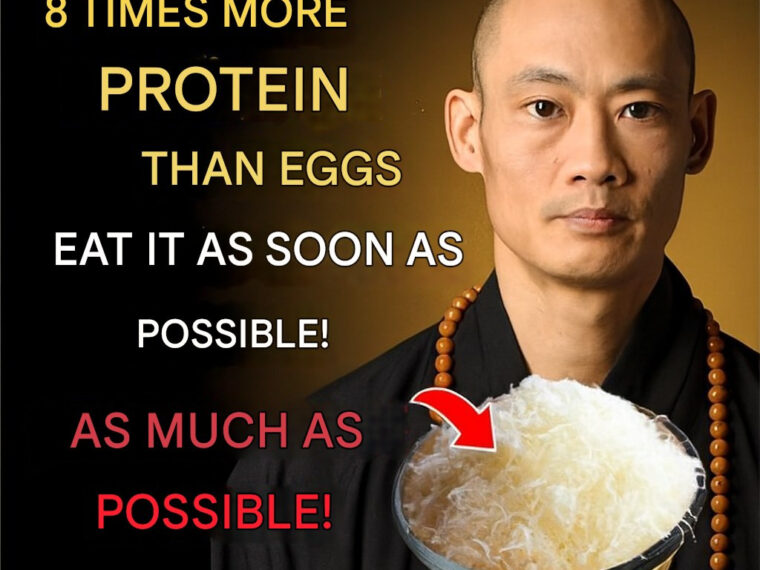
For years, everyone said that eggs were “the king of protein.”
Yes, they are healthy… but after age 60, your body needs something even stronger.
From 50–60 onward, a natural process begins: sarcopenia, the slow loss of muscle mass. This affects:
-
balance and stability
-
energy levels
-
agility
-
risk of falls
-
independence in daily life
The good news?
You can slow it down — or even reverse some of it — by combining gentle movement with high-quality protein spread throughout the day.
And surprisingly, several foods contain far more protein than eggs, and are easier to digest, richer in minerals, and perfect for supporting muscle health as you age.
🥚 How Much Protein Does an Egg Really Have?
-
100 g of boiled egg → ≈ 13 g of protein
-
1 medium egg → 6–7 g
Healthy, yes.
But not even close to the most powerful options.
Below is the list — from lowest to highest protein — per 100 g.
10 Protein-Rich Foods That Surpass Eggs
10. Skimmed Plain Greek Yogurt (≈ 10–11 g)
Very similar to eggs, but with:
-
easier-to-digest dairy protein
-
low fat
-
calcium for bone health
👉 Use it: breakfast bowls, smoothies, dips, sauces.
9. Cooked Chickpeas (≈ 11–12 g)
Better than eggs because they add:
-
fiber (great for digestion and blood sugar)
-
magnesium & iron
-
anti-inflammatory plant nutrients
👉 Use it: hummus, salads, stews, roasted snacks.
8. Cooked Quinoa (≈ 13–14 g)
A rare complete plant protein.
Great for:
-
muscle repair
-
boosting fullness
-
pairing with everything
👉 Use it: as rice, in salads, veggie bowls.
7. Pumpkin Seeds (≈ 18–19 g)
Small… but extremely powerful.
-
almost double the protein of eggs
-
rich in magnesium (cramp prevention)
-
excellent for heart and muscle function
👉 Use it: sprinkle on yogurt, soups, salads, oatmeal.
6. Tempeh (≈ 19–20 g)
Fermented soy = one of the best proteins on earth.
-
complete protein
-
gut-friendly probiotics
-
great meat substitute
👉 Use it: grilled, sautéed, marinated, crumbled in sauces.
continue reading in page 2