
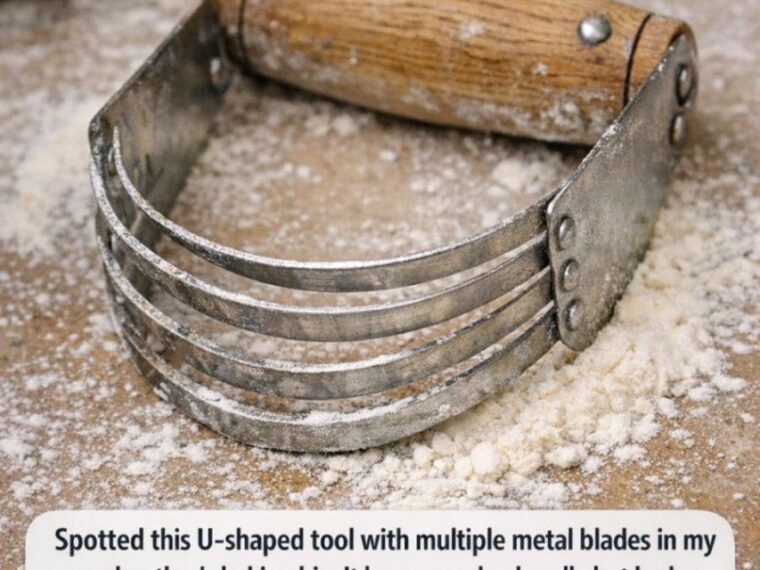
At first glance, the tool in the image might look confusing—almost like a strange set of metal knuckles attached to a wooden handle. Found in a flour-dusted baking bin, it carries a sense of mystery and nostalgia. But this unusual object is far from random. It is, in fact, a classic dough blender, also known as a pastry cutter—a timeless tool once essential in every traditional kitchen.
What Is This Tool?
The U-shaped tool with multiple curved metal blades and a sturdy wooden handle is designed specifically for mixing fat into flour. Bakers use it to prepare doughs that require a crumbly, flaky texture—like:
- Pie crusts
- Biscuits
- Scones
- Crumble toppings
Its design may look simple, but it’s incredibly effective.
How Does It Work?
Unlike a spoon or whisk, this tool is meant to cut through ingredients rather than stir them.
Here’s what happens when you use it:
- Flour and cold butter (or shortening) are placed in a bowl.
- The pastry cutter is pressed down repeatedly into the mixture.
- The metal blades slice through the butter, breaking it into small pieces.
- These pieces get coated with flour, creating a crumb-like texture.
This process is crucial for achieving flaky layers in baked goods.
Why Not Just Use Your Hands?
While many modern recipes suggest using your hands, this tool offers key advantages:
🔹 Keeps Ingredients Cold
Heat from your hands can melt the butter too quickly. The pastry cutter helps maintain the right temperature, which is essential for flaky dough.
🔹 Saves Time and Effort
Its multiple blades allow you to work faster and more evenly compared to using a fork or knife.
🔹 Better Texture Control
You can easily control how fine or coarse the mixture becomes, depending on the recipe.
A Tool with History
Before electric mixers and food processors, tools like this were staples in kitchens around the world. Often passed down through generations, they carry both function and sentimental value.
The wooden handle seen in the image is especially telling—it suggests durability and a design from a time when kitchen tools were made to last for decades.
Why It Looks So Unusual
To someone unfamiliar with baking tools, the curved metal strips might resemble something mechanical or even intimidating. But their shape is intentional:
TO CONTINUE READING THE ARTICLE PLEASE SEE PAGE 2