If you have pine trees around your home, you probably know how quickly pine cones can pile up.
Before you throw them away, take a second look. These natural, free materials can actually be useful around the garden. They can work as decorative mulch, become a simple bird feeder, provide shelter for small garden creatures, or even be added to compost.
Here are some practical ways to give those pine cones a second life.
1. Use Pine Cones as Natural Mulch


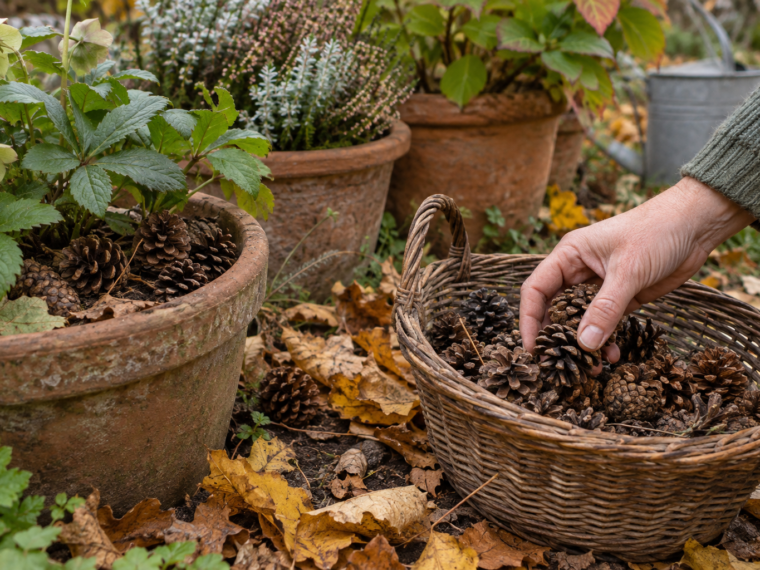
One of the easiest ways to reuse pine cones is to spread them around established plants.
Place them on the surface of the soil around shrubs, trees, flowers, and other garden plants. They create a natural, rustic appearance while covering exposed soil.
Pine cones break down slowly, so they can remain in place for quite a while. They can also help reduce exposed soil and may discourage some weeds from appearing.
For the best results, leave a little space between the pine cones and the stems or trunks of your plants rather than piling them directly against them.
2. Clean and Dry Pine Cones Before Using Them

If you collect pine cones from outside, give them a quick cleanup before using them.
Shake off loose needles, dirt, leaves, and other debris. You can rinse them if necessary, then allow them to dry completely in a warm, well-ventilated place.
Pine cones naturally close when they become wet and open again as they dry.
Thorough drying is especially useful if you plan to bring them indoors for crafts or decoration.
3. Create a Natural Garden Border

Pine cones can make inexpensive and attractive garden decorations.
Arrange them around trees, flower beds, large planters, pathways, or decorative areas of your yard.
Their brown color and unusual texture work particularly well in rustic, woodland, cottage, and natural-style gardens.
Just avoid using loose pine cones as the main surface of a heavily used walkway. They can move underfoot and become slippery when wet.
4. Use Pine Cones in Large Containers


In some very large containers, pine cones can be useful for occupying part of the unused volume and reducing the amount of potting mix needed.
They are relatively lightweight and can be useful when a large decorative planter does not need to be filled entirely with growing medium.
However, there is an important point to remember: pine cones placed at the bottom of a pot do not automatically improve drainage.
Good drainage mainly depends on having drainage holes and using an appropriate potting mix.
So use pine cones for their lightweight bulk when appropriate, not as a substitute for proper drainage.
5. Add a Protective Layer Before Cold Weather

A layer of organic material over the soil can help reduce rapid temperature changes around plant roots.
Pine cones can therefore be part of a winter garden covering, particularly around established shrubs and perennial plants.
However, they should not be considered a replacement for proper frost protection.
If a plant is particularly sensitive to freezing temperatures, use frost cloth or another appropriate protective method when necessary.
And just like with mulch, avoid piling large amounts directly against the base of the plant.
6. Turn Them Into a Small Wildlife Shelter
continue reading in page 2