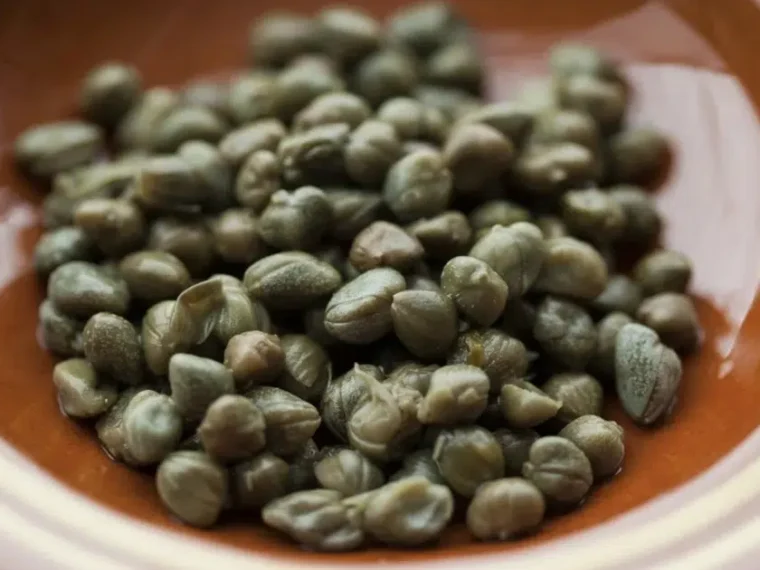
Have you ever encountered tiny green spheres in a Mediterranean dish and wondered what they were? They may look like little green peas, but capers are actually something quite different. These small, intensely flavored buds have been used in cooking for centuries and can transform an ordinary dish with just a spoonful.
Salty, tangy, slightly bitter, and surprisingly aromatic, capers are one of those ingredients that don’t need to be used in large quantities to make a noticeable difference. They are particularly popular in Mediterranean cuisine, where they appear in everything from pasta and fish dishes to salads, sauces, and appetizers.
But what exactly are capers, where do they come from, and how should you use them in your own kitchen?
What Exactly Are Capers?
Capers are the unopened flower buds of the caper bush, scientifically known as Capparis spinosa.
The plant is a hardy perennial shrub that grows naturally in warm, dry regions, particularly around the Mediterranean and parts of Asia and Africa. It thrives in rocky, sunny environments and can tolerate relatively poor soil.
The buds are harvested before they open into flowers. They are then usually preserved in salt, vinegar, brine, or sometimes a combination of preservation methods.
This curing process is responsible for much of the intense flavor associated with capers.
Fresh caper buds aren’t typically what you find in the supermarket. Instead, you’ll most often encounter them preserved in a jar or container.
What Do Capers Taste Like?
Capers have a distinctive flavor that can be difficult to compare with another single ingredient.
They are generally:
- Tangy
- Salty
- Briny
- Slightly bitter
- Herbal
- Sharp and savory
Their strong flavor means you usually don’t need many.
A tablespoon of capers can add an enormous amount of character to an otherwise simple sauce.
That’s why they’re often used as a finishing ingredient rather than as the main component of a dish.
Are Capers the Same as Green Olives?
No, although it’s easy to understand why people sometimes confuse them.
Capers are flower buds, while olives are fruits.
They also have different textures and flavors. Both can contribute salty, savory notes to Mediterranean dishes, but they aren’t interchangeable in every recipe.
Interestingly, there is another product called caperberries.
Caperberries are the fruits that develop if caper flowers are allowed to mature. They’re larger than capers and usually contain small seeds inside.
So, despite their similar names, capers and caperberries are two different parts of the same plant.
Why Are Capers So Salty?
The saltiness doesn’t necessarily come from the caper itself.
Most commercially available capers are preserved in brine, vinegar, or salt. As a result, the liquid surrounding them can contain a significant amount of sodium.
This is important when cooking with them.
If you’re adding capers to a recipe, taste the dish before adding additional salt. The capers may already provide enough seasoning.
Should You Rinse Capers Before Using Them?
It depends on the recipe and your personal preference.
If you love a strong salty flavor, you can drain them and add them directly.
However, if you’re concerned that they’ll overpower your dish, rinse them briefly under cool water and drain them well.
Rinsing can remove some of the excess brine and make their flavor a little more subtle.
For some recipes, especially delicate sauces, this can make a noticeable difference.
How to Use Capers in Cooking
One of the best things about capers is their versatility.
Pasta
Capers are fantastic in pasta sauces.
Try combining them with:
- Garlic
- Olive oil
- Lemon
- Tomatoes
- Parsley
- Chili flakes
They work particularly well in bright, Mediterranean-style pasta dishes.
A classic example is pasta puttanesca, which combines capers with ingredients such as tomatoes, olives, garlic, and anchovies.
The capers add acidity and a salty punch that helps balance the other ingredients.
Capers With Fish
Capers and fish are a particularly famous combination.
Their sharp, briny flavor pairs beautifully with mild fish such as cod, sea bass, or tilapia, as well as richer fish such as salmon.
One of the easiest preparations is to cook fish in a pan and finish it with a sauce made from:
- Butter or olive oil
- Lemon juice
- Capers
- Garlic
- Fresh parsley
The acidity of the lemon and the saltiness of the capers help cut through the richness of the fish.
Chicken Piccata
If you’ve ever eaten chicken piccata, you’ve probably tasted capers.
This classic dish typically combines thin pieces of chicken with a bright sauce containing lemon, butter, and capers.
The capers provide little bursts of salty acidity throughout the dish, preventing the buttery sauce from becoming too heavy.
It’s one of the easiest ways to understand why chefs love this tiny ingredient.
Add Them to Salads
continue reading in page 2