
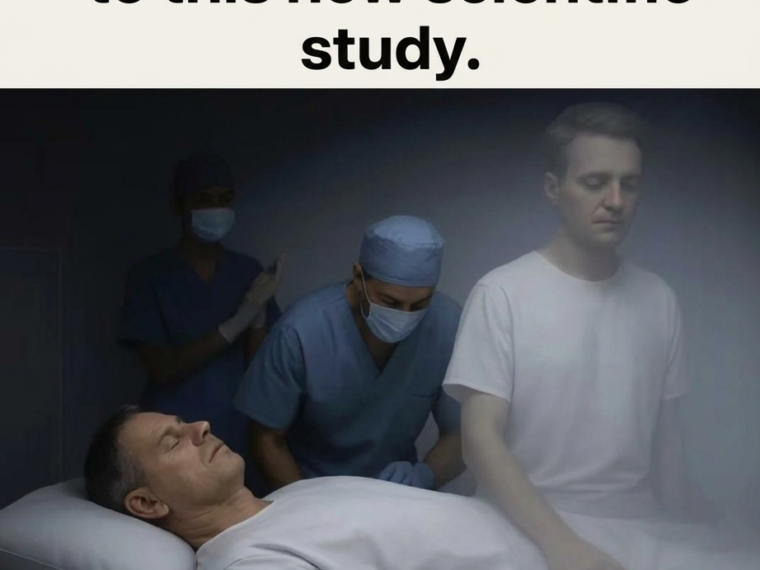
What happens when the heart stops beating? Is it really the end, or is there still something playing out, silently, on the inside? Behind this great mystery that is death, science is beginning to lift the veil. And what it is discovering might just surprise you…
What Science Says
The latest scientific discoveries are challenging our view of death: far from shutting down instantly, the brain sometimes continues to produce intense electrical activity for a few seconds, or even minutes, after the heart stops. This activity resembles that of sleep or memory recall phases, offering fascinating insight into the phenomenon of “life recall”—that impression of seeing one’s entire life flash before their eyes. Some researchers, such as Stuart Hameroff, even put forward controversial theories, suggesting that this cerebral surge could be linked to a final burst of consciousness, or even its departure from the body. Although these hypotheses remain speculative, they open up a dizzying field of reflection—not only scientific, but also medical and ethical—as they could redefine the boundaries between life and death and influence crucial decisions such as organ donation or end-of-life care.
The Body Fades… But Not All at Once
We often picture death as a clean, abrupt halt. In reality, it is more of a slow slide. It all begins with a collapse of vital functions: the heart stops, circulation ceases, and the brain, deprived of oxygen, enters its final phase.
However, this process is not instantaneous. For a few minutes longer, certain brain cells continue to function. Sometimes they even activate intensely, as if in a final surge. This phenomenon, observed in humans and confirmed by animal studies, intrigues scientists: the brain appears to produce signals very similar to those observed during a state of consciousness… even while the body is declared clinically dead.
The Brain Releases Its “Final Cocktail”
In these ultimate moments, our brain enters a state of chemical turmoil. It releases an avalanche of neurotransmitters: endorphins, serotonin, and even a compound well known in scientific circles for its powerful effects on perception—DMT.
- Endorphins, those famous “happiness molecules,” act as a powerful natural painkiller. They could explain why some people close to the end describe an intense feeling of peace, even in critical situations.
- Serotonin influences our mood and perceptions. At very high levels, it can trigger vivid visions, unusual sounds, or an “out-of-body” sensation—all elements frequently reported during near-death experiences.
- DMT, naturally produced in very small quantities in the brain, is believed to be released massively at the end of life. This compound is known to induce very intense visions, sometimes described as mystical or transcendent.
A Persistent Consciousness After the Heart Stops?
continue reading in page 2