
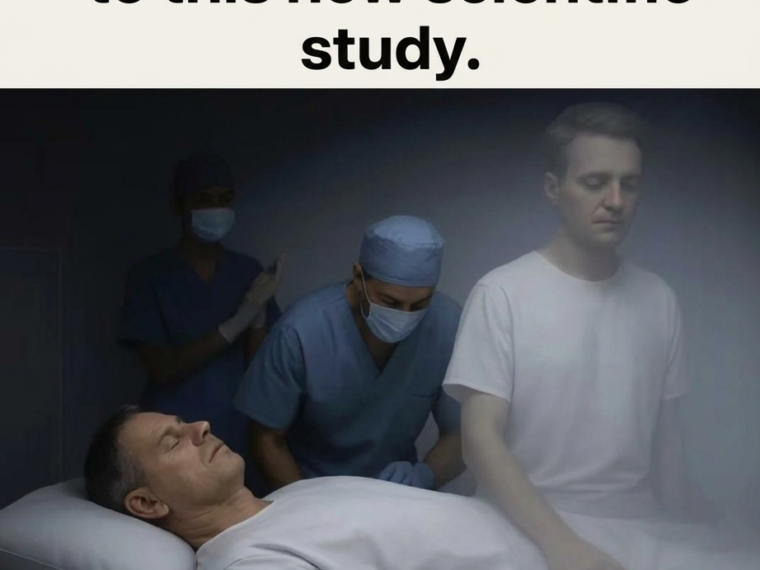
This is the question rattling neuroscientists: can one be conscious after clinical death? Certain studies, such as the one led by Dr. Sam Parnia, have shown that patients revived after cardiac arrest retained precise memories of what was happening around them… even though they were supposed to no longer perceive their environment.
While these accounts are rare, they are often accompanied by similar sensations: a tunnel of light, the feeling of floating above one’s body, or meaningful encounters. This does not prove that a form of life after death exists, but it calls into question the exact boundary between life and non-life.
A Anything-But-Instant Decomposition
From a purely physical standpoint, the body also continues its journey, but in reverse. Shortly after death, a series of natural processes are triggered: muscle stiffness, gradual relaxation, and finally, tissue breakdown.
This phenomenon, called autolysis, is caused by enzymes that begin to digest cells. Then comes putrefaction: bacteria, previously contained by the immune system, multiply and begin their work of decomposition.
Yet here again, everything depends on external conditions: temperature, humidity, environment… every body follows its own rhythm.
What If All of This Was Just a Final Spark of Lucidity?
Science is progressing, and with it, our understanding of this very particular moment that is the end of life. What was once thought to be a rapid extinction seems, in reality, far more complex—almost orchestrated.
The chemical reactions, the brain activity, the sensations reported by revived individuals… all of this paints a picture as baffling as it is fascinating. No, we do not know everything yet. But one thing is certain: death, in its biological dimension, is anything but a simple stop.
What if this last breath was, in the end, nothing more than a final surge of life?