
At first glance, many aromatic herbs can look remarkably similar, especially when they are fresh. Their green leaves, delicate stems, and distinctive fragrances make them popular ingredients in kitchens around the world. However, each herb has its own unique characteristics, flavor, aroma, and culinary uses.
Knowing how to identify these plants can help you choose the right ingredient for your recipes, grow your own herbs at home, and make the most of their flavors in everyday cooking.
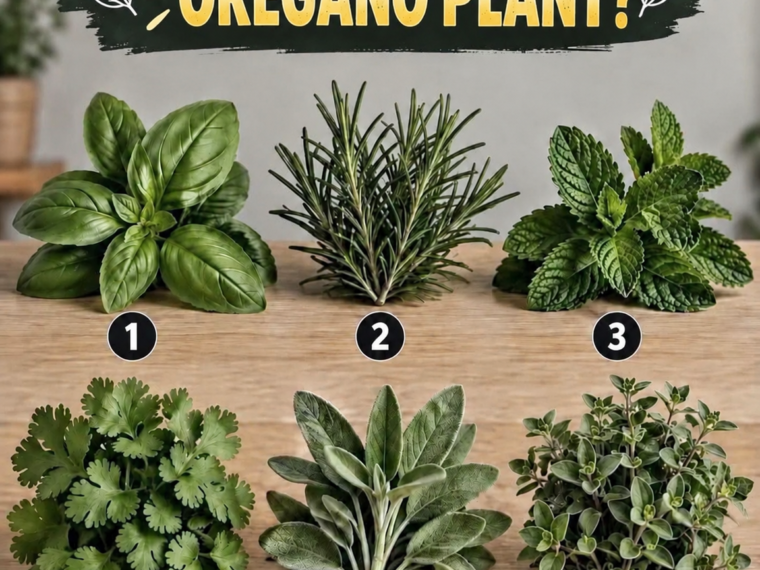
The image features six popular aromatic herbs: basil, rosemary, mint, cilantro, sage, and oregano. Although they all belong to the world of culinary herbs, their appearance varies considerably when you know what to look for.
The correct answer is number 6: oregano.
Let’s take a closer look at each plant and discover the features that make it easy to recognize.
1. Basil: The Fragrant Herb of Mediterranean Cuisine
Basil (Ocimum basilicum) is one of the most recognizable aromatic herbs, particularly in Mediterranean cuisine. It generally has broad, smooth, bright green leaves with a slightly glossy surface. Depending on the variety, its leaves may be oval, pointed, or slightly curved at the edges.
One of basil’s most distinctive features is its fresh, sweet aroma, sometimes accompanied by hints of pepper, clove, or anise. When its leaves are gently rubbed, they release a strong fragrance that makes the plant relatively easy to identify.
Basil is especially popular in Italian cooking. It is a key ingredient in traditional pesto and pairs beautifully with tomatoes, mozzarella, olive oil, and garlic. It can also be added to salads, pasta dishes, homemade sauces, soups, and vegetable recipes.
For the best flavor, fresh basil is often added toward the end of cooking. Prolonged exposure to heat can diminish its delicate aroma and darken its leaves.
When identifying basil in the image, look for plant number 1, which has large, smooth, oval-shaped leaves.
2. Rosemary: The Herb With Needle-Like Leaves
Rosemary (Salvia rosmarinus) is a woody, evergreen shrub that stands out because of its narrow, elongated leaves. Unlike basil or mint, rosemary does not have broad, delicate foliage. Its leaves resemble small needles and grow along firm, woody stems.
The upper surface of its leaves is usually dark green, while the underside is often lighter. Rosemary also has a powerful, distinctive fragrance with woody, pine-like, and slightly peppery notes.
This herb is particularly useful in recipes that require longer cooking times because it retains much of its flavor when exposed to heat. It is commonly used to season roasted potatoes, grilled vegetables, bread, soups, marinades, and meat dishes.
Rosemary can also be added to olive oil or infused into sauces to provide a deeper aromatic flavor. Because its leaves are firm and somewhat tough, they are often removed from the stems before cooking or used whole to flavor a dish and removed before serving.
In the image, plant number 2 is rosemary. Its thin, needle-shaped leaves make it one of the easiest herbs to distinguish from the others.
3. Mint: The Fresh and Cooling Aromatic Herb
Mint belongs to the genus Mentha, which includes several familiar varieties, such as spearmint and peppermint. It is generally recognized by its green leaves, serrated edges, and textured surface. Many mint plants also have slightly square stems, a common characteristic of the mint family.
Its fragrance is fresh, cooling, and immediately recognizable. Depending on the variety, mint may have a sweet, mild aroma or a more intense, menthol-like scent.
Mint is widely used in herbal teas, refreshing drinks, desserts, fruit salads, and savory dishes. In Morocco, fresh mint is particularly important for preparing traditional Moroccan mint tea, a popular drink enjoyed throughout the day.
The herb also complements ingredients such as lemon, cucumber, yogurt, peas, and fresh fruit. Its refreshing flavor can bring balance to dishes that are rich, spicy, or heavy.
Mint grows vigorously under suitable conditions and can spread quickly in a garden. Growing it in a separate pot is often a practical way to prevent it from taking over nearby plants.
In the image, plant number 3 represents mint. Its textured, toothed leaves help distinguish it from the smoother leaves of basil and the smaller leaves of oregano.
4. Cilantro: The Delicate Herb With Divided Leaves
Cilantro, also known as fresh coriander in many countries, comes from Coriandrum sativum. It has delicate green leaves that are often divided into rounded, scalloped sections, particularly on the younger parts of the plant.
Its appearance is quite different from that of basil, rosemary, and sage. Rather than having thick, broad leaves or needle-like foliage, cilantro produces light, delicate greenery with a feathery appearance.
Cilantro has a distinctive, fresh, citrus-like aroma that is especially noticeable when the leaves are crushed or chopped. Its flavor can be bright and lively, although individual preferences vary considerably.
This herb is widely used in Moroccan, Mexican, Indian, Middle Eastern, and Southeast Asian cuisines. It is commonly added to salads, soups, stews, sauces, marinades, and vegetable dishes. In Moroccan cooking, fresh coriander is often used alongside parsley, garlic, paprika, cumin, and other seasonings.
An important detail is that cilantro leaves and coriander seeds come from the same plant, but they have different flavors. The fresh leaves are bright and herbaceous, while the dried seeds have a warmer, slightly citrusy, and spicy flavor.
For the best results, fresh cilantro is often added near the end of cooking or used as a garnish to preserve its aroma.
In the image, plant number 4 is cilantro. Its finely divided leaves make it easy to distinguish from the broader leaves of basil and sage.
5. Sage: The Herb With Soft, Velvety Leaves
Sage (Salvia officinalis) is a perennial aromatic plant known for its distinctive gray-green foliage. Its leaves are generally elongated, slightly oval, and covered with fine hairs that give them a soft, velvety texture.
Unlike basil’s smooth, glossy leaves, sage leaves often look matte and feel slightly fuzzy. Their pale green or silvery appearance is one of the plant’s most recognizable features.
Sage has a strong, earthy aroma with woody, peppery, and slightly bitter notes. Its flavor is more pronounced than that of many delicate herbs, so it is generally used in moderate quantities.
In cooking, sage is particularly popular in European cuisines. It pairs well with roasted vegetables, butter-based sauces, beans, stuffing, soups, and certain pasta dishes. Its robust flavor also works well with pumpkin, squash, and other ingredients that have a naturally sweet taste.
Sage is a hardy plant that can grow well in sunny locations with well-drained soil. Like many Mediterranean herbs, it generally prefers conditions that are not excessively wet.
In the image, plant number 5 is sage. Look for its thick-looking, elongated, gray-green leaves with a soft, velvety surface.
CONTINUE READING IN PAGE 2