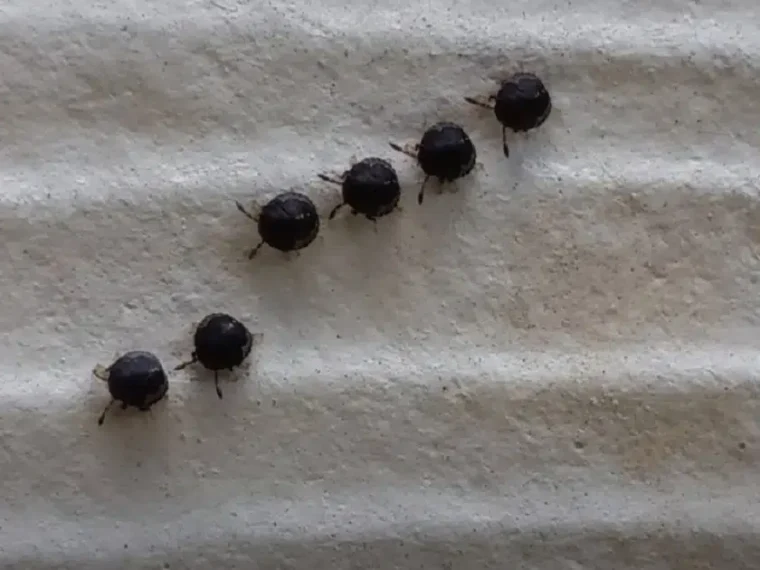
Have you ever been out in the garden weeding or monitoring your tomatoes, then froze when you noticed some objects that looked remarkably like a handful of ideal little blueberries attached to the stems of your plants? They are shiny, round, the same appealing deep blue color, and your brain goes “hey, free snack.” But the good news is you really don’t want to eat them and the bad news is what you are looking at is likely not a fruit. It is a bug, more specifically, Homaemus proteus, more commonly known as the Jewel Bug or Shield Bug.
The “Blueberry” Impostor
So, let’s imagine that you are hunched down on the soil, somewhat distracted, and your vision catches those bright beads located along the leaves. They look real enough you could almost grab one and place it directly in your mouth. However, looks can be deceiving, and if you look closely, you will realize that they are not berries, but rather living insects that happen to have shiny armor simulating something succulent.
That is Homaemus proteus’s survival strategy. They fit comfortably within the garden because they look like a secret agent wearing fruit-colored camouflage. They are small, round, and glossy and successfully trick both people and predators. Clever little creatures, even if you feel a little disturbed once you realize what is going on.
Why You Shouldn’t Touch or Eat Them
So, what is the harm in brushing one off your plant or thinking that it might be edible if you weren’t paying attention? Well, there are a handful of reasons! First, we’ll cover taste. Let’s just put it this way, these bugs are not for human snacking! They don’t have a sweet, juicy burst like a blueberry. What they have is bitterness, the very thing nature gives as a warning. You would regret that bite immediately.
Then, there is the biggest issue, toxicity. That blue color is not for decoration, that is a signal! A built-in warning label to whatever may want to eat them. Many brightly colored insects will produce toxins or some defensive compound, and Homaemus proteus can certainly do so. Not all species are toxic, but the point is that these “berries” are dressed this way for a reason, and that reason is to keep mouths (including yours) away.
The Role They Have in the Garden
continue page 2