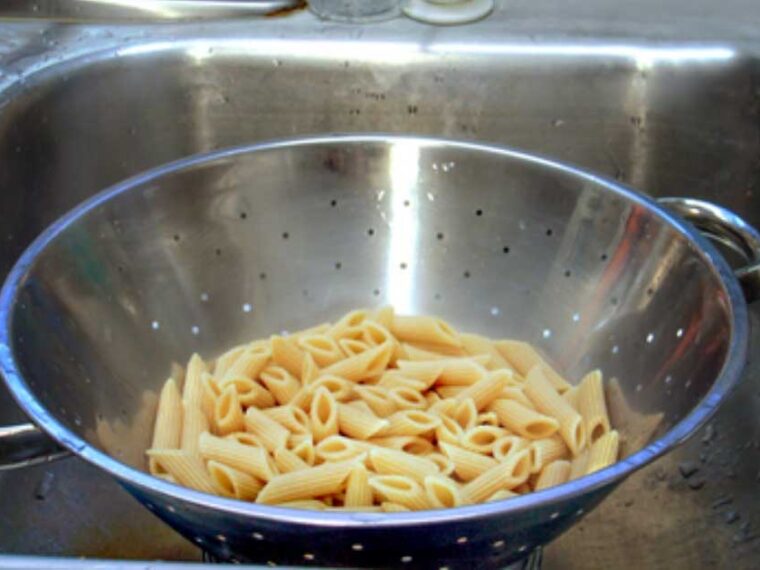
Leaving pasta sitting in a colander for several minutes can cause it to cool quickly.
As it cools:
- The starch on the surface becomes sticky.
- Noodles begin clumping together.
- Sauces don’t coat the pasta as well.
- The texture becomes less appealing.
Instead, have your sauce ready before draining.
Transfer the pasta directly into the pan with the sauce while it’s still hot.
This allows the noodles to absorb flavor instead of simply wearing the sauce on the outside.
Avoid Rinsing Pasta (Most of the Time)
Another common mistake happens immediately after draining.
Many people rinse hot pasta under cold running water.
Unless you’re making a cold pasta salad or stopping the cooking process for a specific recipe, this usually isn’t recommended.
Rinsing removes the starchy coating that helps sauce stick.
The result is often a watery dish where the sauce slides right off the noodles.
Watch Out for Steam Burns
Draining a large pot of boiling water can be surprisingly dangerous.
Steam escaping from the pot is hot enough to burn skin almost instantly.
To stay safe:
- Wear oven mitts if necessary.
- Pour slowly.
- Keep your face away from the steam.
- Use a stable colander that won’t tip over.
- Avoid rushing.
Kitchen accidents often happen during the final step when people think the hard part is already over.
Don’t Let Pasta Clog Your Drain
Most colanders catch nearly every noodle, but small pasta shapes occasionally escape.
Over time, food scraps can contribute to drain clogs—especially when combined with grease, oil, or other debris.
Instead of washing leftover pasta down the sink, scrape it into the trash or compost if appropriate.
Your plumbing will thank you.
Should You Drain Pasta Completely?
Not always.
Many recipes benefit from leaving just a small amount of cooking water clinging to the noodles.
This extra moisture helps sauces blend more smoothly and keeps pasta from drying out before serving.
Professional chefs often use tongs or a spider strainer to transfer pasta directly from the pot into the sauce without fully draining it.
This technique naturally carries some of the valuable pasta water along.
Better Ways to Drain Pasta
If you cook pasta regularly, consider these methods:
Use a Clean Colander
The classic approach still works perfectly—as long as both the sink and the colander are clean.
Use Tongs
Long noodles like spaghetti or fettuccine can often be transferred directly into the sauce using tongs.
Use a Spider Strainer
Many restaurants use a wire spider to lift pasta directly from boiling water.
This preserves more starch while reducing waste.
Reserve Pasta Water First
Before draining, scoop out one or two cups of cooking water with a heatproof measuring cup or ladle.
You’ll be glad you did when it’s time to finish the sauce.
Frequently Asked Questions
Is it safe to drain pasta in the sink?
Yes—provided you’re draining it into a clean colander placed in a clean sink. The concern isn’t the sink itself but whether it’s clean and whether your pasta comes into contact with contaminated surfaces.
Should I wash my sink before draining pasta?
If the sink has recently been used for raw meat, dirty dishes, or food preparation, cleaning it first is a smart food safety habit.
Why do chefs save pasta water?
The starch in pasta water helps emulsify sauces, making them smoother and helping them coat the pasta more evenly.
Is rinsing pasta ever a good idea?
Yes. Rinsing is useful for cold pasta salads or recipes where you want to stop the cooking process. For most hot pasta dishes, it’s better to skip the rinse.
The Bottom Line
Draining pasta in the sink isn’t inherently a mistake—millions of people do it safely every day. The key is making sure your sink and colander are clean, handling the hot water carefully, and remembering to save some of that valuable starchy cooking water before you pour it away.
A few simple habits can improve both the safety and the flavor of your meals. Clean your sink regularly, avoid letting cooked pasta touch contaminated surfaces, keep your sauce ready before draining, and don’t underestimate the power of reserved pasta water.
Sometimes, the smallest changes in the kitchen make the biggest difference on the plate.