It’s natural to want to pet a beautiful dog.
Most people love dogs.
But if a dog appears to be working, even a brief distraction can interfere with its concentration.
Imagine interrupting someone while they’re operating heavy machinery or helping another person cross a busy street.
Working dogs need that same level of focus.
Even calling the dog, making kissing noises, or trying to get its attention can interrupt its training or task.
The best thing you can do is admire the dog from a respectful distance unless the handler invites interaction.
What Should You Do If You See a Dog Wearing Blue?
If you notice blue working gear, follow a few simple guidelines:
Give the Dog Space
Avoid walking directly toward the dog or allowing your own pet to approach.
Working dogs need room to concentrate.
Don’t Pet Without Permission
Even if the dog looks friendly, always ask the handler first.
Many working dogs cannot interact while they’re on duty.
Don’t Offer Food
Treats may distract the dog from an important task or interfere with its training.
Speak to the Handler
If you need assistance or have a question, address the person—not the dog.
The dog is working on behalf of its handler.
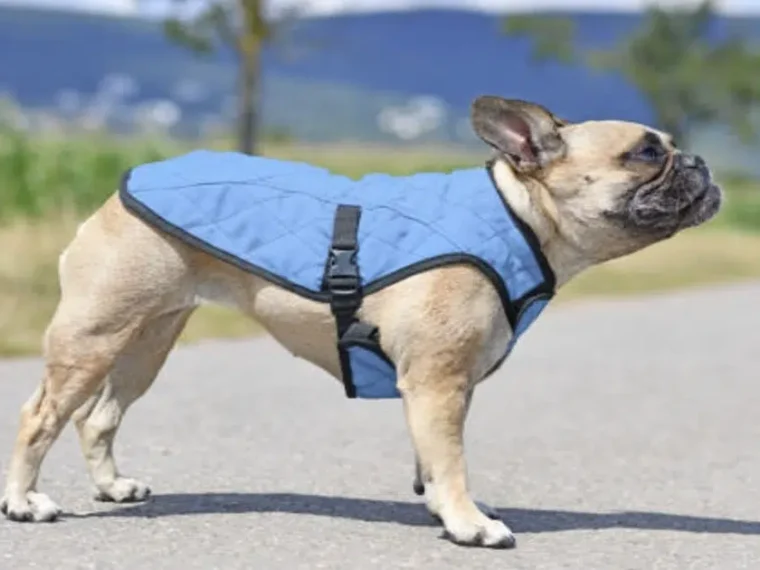
Could the Blue Gear Just Be a Fashion Choice?
Absolutely.
Blue is one of the most popular colors for pet accessories.
Many owners simply choose blue because:
- It complements their dog’s coat.
- It’s easy to see outdoors.
- It looks clean and professional.
- Their dog wears matching collars and leashes.
- It’s their favorite color.
Without labels such as “Service Dog,” “Therapy Dog,” or “In Training,” it’s impossible to know the reason based solely on color.
That’s why it’s always best to avoid making assumptions.
Other Dog Gear Colors You May See
Blue isn’t the only color that sometimes carries meaning.
Although there is no universal color code, many owners use different colors to communicate information.
For example:
- Yellow: Often indicates a dog that needs extra space.
- Red: Sometimes signals that a dog should not be approached.
- Orange: May indicate a dog in training or one that prefers more distance.
- Green: Sometimes suggests a friendly dog, although this isn’t standardized.
Because these colors are not regulated, it’s always wise to read any patches or labels and ask the owner if you’re unsure.
Frequently Asked Questions
Does every blue vest mean the dog is a service dog?
No. While many organizations use blue equipment for service or therapy dogs, some pet owners simply like the color.
Can service dogs wear other colors?
Yes. There is no universal requirement that service dogs wear blue. Working dogs may wear equipment in many different colors—or, in some situations, no vest at all.
Should children pet a dog wearing a blue vest?
Children should always ask the handler for permission first. Many working dogs should not be distracted while performing their duties.
Can service dogs play when they’re off duty?
Yes. When they’re not working, service dogs are still dogs. They enjoy relaxing, playing, and spending time with their handlers just like any other pet.
Why Awareness Matters
Most people don’t intend to interrupt a working dog—they simply don’t realize the dog is performing an important task.
By understanding what blue gear may represent, we help create a more supportive environment for people who rely on assistance dogs every day.
Whether a dog is guiding someone through a crowded airport, alerting its handler to a medical condition, participating in therapy visits at a hospital, or simply learning the skills needed for future service work, a little courtesy goes a long way.
The next time you spot a dog wearing a blue vest, leash, harness, or bandana, take a moment before reaching out. That dog may be much more than a well-behaved pet—it could be a highly trained working partner whose focus helps keep someone safe, independent, and confident.
And if the blue gear turns out to be nothing more than a stylish accessory? That’s okay too. A little respect and kindness toward every dog and every owner is never out of fashion.