
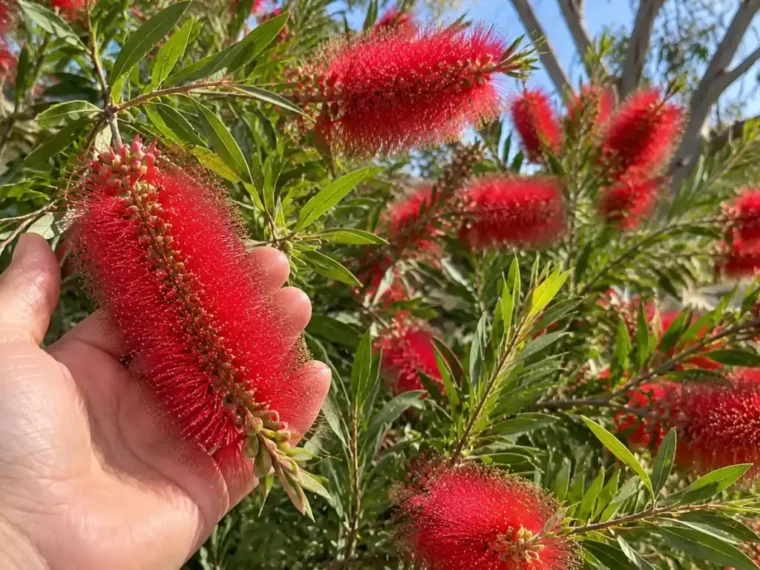
The crimson or lemon bottlebrush is one of the most recognizable garden shrubs in the world, famous for its bright red, brush-shaped flowers. Known scientifically today as Melaleuca citrina—and traditionally for generations as Callistemon citrinus—this tough evergreen plant is much more than a pretty backyard ornament.

Belonging to the myrtle family (Myrtaceae), the lemon bottlebrush is a direct relative of both the eucalyptus tree and the medicinal tea tree. If you crush one of its narrow green leaves between your fingers, you will immediately smell a clean, sharp aroma that blends fresh lemon with soft eucalyptus. For centuries, traditional healers and everyday households have used the leaves and flowers of this plant to clear congested lungs, fight germs, soothe sore skin, calm aching joints, and make refreshing natural drinks.
Understanding the Plant: Why It Has Two Names
When looking up information about this plant, you will see two different scientific names used for the exact same tree:
- Callistemon citrinus (The Traditional Name): Given in the early 1800s by Scottish botanist Robert Brown, the word Callistemon comes from Greek words meaning “beautiful stamens,” referring to the long red threads that form the flower spike. The word citrinus refers to the distinct lemon scent of the leaves.
- Melaleuca citrina (The Modern Name): Modern plant scientists discovered that bottlebrush plants are so closely related to tea trees (Melaleuca) that they belong in the same plant group.
- Common Everyday Names: Around the world, people simply call it the Crimson Bottlebrush, Red Bottlebrush, or Lemon Bottlebrush.
How to Recognize Lemon Bottlebrush
Before using any plant at home, it is important to make sure you have the right species. You can identify Melaleuca citrina by these simple features:
- Size and Shape: It grows as a hardy evergreen bush or small tree, reaching anywhere from 2 to 6 meters in most gardens, and up to 15 meters in the wild.
- The Leaves: The leaves are stiff, narrow, mid-green, and come to a sharp point at the tip. Young new leaves often look slightly pinkish or silky before turning green.
- The Smell Test: When you tear or crush a mature green leaf, it releases a strong, unmistakable scent of lemon mixed with eucalyptus. Other bottlebrush species do not have this clear lemon fragrance.
- The Flowers: In spring, summer, and autumn, the branches produce bright crimson-red flower spikes shaped like cylinder brushes used to wash glass bottles.
- The Seed Pods: After the red flowers drop off, small woody capsules remain stuck to the branches in tight clusters, looking like tiny gray wooden beads.
What Gives Melaleuca citrina Its Power?
The healing power of the lemon bottlebrush is not magic—it comes from strong natural plant chemicals stored inside its leaves and flowers. Scientific testing of the plant shows that it is packed with active compounds that protect the plant in nature and offer useful health benefits for humans:
- Eucalyptol (1,8-Cineole): This is the main active ingredient in the leaves, making up between 40 percent and 73 percent of the leaf’s natural oil. Eucalyptol is famous for breaking down thick mucus in the chest and sinuses, opening tight airways, calming cough spasms, and killing airborne germs.
- Linalool: Making up around 27 percent of the leaf oil in many plants, linalool is a gentle aromatic compound known for calming irritation, soothing the skin, and helping the body relax.
- Alpha-Pinene and Beta-Pinene: These natural compounds give the plant its crisp, woody undertone. They help reduce swelling in the breathing passages and fight harmful bacteria.
- Polyphenols and Phloroglucinols: Found in high amounts in the bright red flowers and leaves, these natural plant antioxidants help block pain signals and calm swelling and inflammation in body tissues.
Proven Traditional Benefits of Lemon Bottlebrush
Across Australia, Asia, Africa, and the Caribbean, different parts of the lemon bottlebrush have been used in folk medicine for everyday health and household needs. Here are the main ways this plant helps the body:
1. Clears Chest and Sinus Congestion
- Loosens sticky mucus in the lungs and nasal passages so you can cough or blow it out more easily.
- Helps calm stubborn coughs, bronchitis, and tight feelings in the chest during seasonal colds.
- Soothes dry, scratchy throats when used as a warm steam or mild gargle.
2. Fights Bacteria and Fungal Infections
- Works as a strong natural antiseptic on the skin.
- Laboratory studies show that extracts from the leaves help stop the growth of common bacteria that cause skin and throat infections, as well as stubborn fungi and yeasts.
- Helps keep minor cuts, scrapes, and insect bites clean so they can heal properly.
3. Calms Joint Pain, Muscle Aches, and Swelling
- Contains natural anti-inflammatory and pain-relieving compounds that work in a similar way to mild over-the-counter pain relievers.
- Used traditionally as a warm rub or compress for rheumatism, stiff joints, and sore muscles after physical work.
4. Supports Digestion and Settles the Stomach
- In traditional Jamaican and Asian folk medicine, a weak hot tea made from the leaves is used to calm upset stomachs, cramps, and diarrhea.
- Acts as a mild astringent, which helps tighten and soothe irritated tissues in the digestive tract.
5. Provides Natural Hydration and Energy
- The crimson flowers are completely edible and produce drops of sweet liquid nectar.
- Indigenous Australians traditionally soaked the flower spikes in water to create an instant, sweet bush drink that restores energy on hot days.
6. Repels Pests and Cleans the Home
- The strong lemon-eucalyptus scent naturally drives away mosquitoes, flies, ants, and moths.
- Leaf infusions can be used to wipe down kitchen counters, freshen stale laundry, and clear bad odors from indoor air.
How to Harvest and Prepare Bottlebrush at Home
Before making any homemade remedy, follow these simple harvesting rules to get the cleanest, strongest plant material:
- Pick from Clean Locations: Only gather leaves and flowers from trees that have not been sprayed with chemical pesticides, weed killers, or fertilizers. Avoid picking from trees growing right next to busy roads where car exhaust settles on the leaves.
- Harvesting Flowers: Pick fresh, bright red flower spikes in the morning just after the flowers have fully opened. This is when they hold the most sweet nectar.
- Harvesting Leaves: Choose healthy, fully grown mid-green leaves rather than tiny new shoots. Crush one leaf first—the stronger the lemon smell, the more beneficial natural oils it contains.
- Cleaning: Rinse leaves in cool running water to wash off dust and bird droppings. For flower spikes, gently shake them or blow on them to let tiny insects crawl away rather than washing them under strong water, which washes away the sweet nectar.
- Drying for Later Use: Spread clean leaves in a single layer on a clean cloth or paper towel in a warm, shaded room with good airflow. Never dry them in direct hot sunlight or a hot oven, as heat evaporates the healing oils. Once crisp and dry, crush them and store them in a tightly sealed glass jar in a dark cupboard for up to one year.
6 Simple Homemade Ways to Use Melaleuca citrina
continue reading in page 2


