
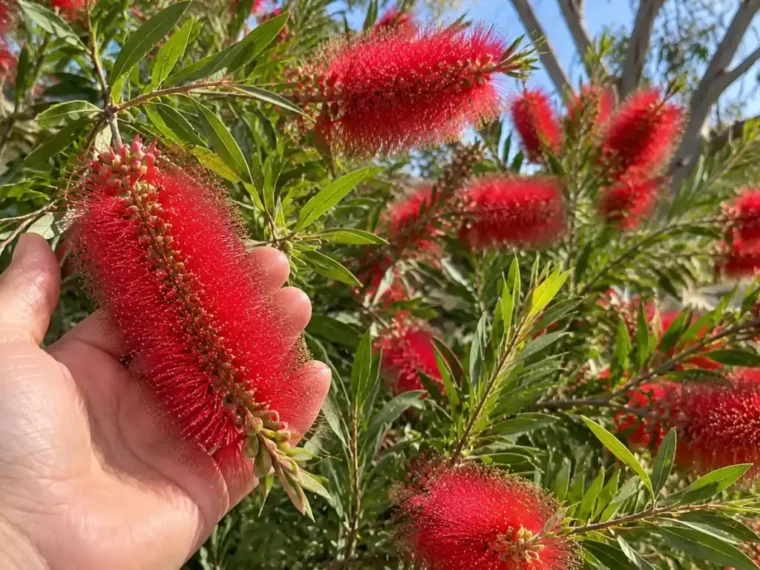
You do not need expensive lab equipment to use the lemon bottlebrush at home. Below are six practical, traditional preparations anyone can make in a normal kitchen.
1. Traditional Sweet Flower Nectar Drink (Cold Bush Tea)
This is the easiest and safest way to enjoy the plant. It makes a light, floral, lemon-kissed energy drink without any boiling required.
What You Need:
- 3 to 4 fresh crimson bottlebrush flower spikes
- 4 cups (1 liter) of cool or room-temperature drinking water
- A clean glass pitcher or jar
How to Make and Use It:
- Gently shake the freshly picked flower spikes to make sure no ants or bees are hiding inside.
- Place the flower spikes into the glass pitcher and pour the water over them.
- Stir gently and let the flowers soak for 30 to 60 minutes (or place the pitcher in the refrigerator for 2 to 3 hours for a stronger taste).
- Remove the flowers, strain the liquid through a fine mesh strainer to catch any loose red stamens, and drink it cold for a refreshing natural boost.
2. Soothing Lemon Bottlebrush Leaf Tea (Hot Infusion)
The leaves make a pleasant, caffeine-free herbal tea substitute with a refreshing lemon-herbal flavor. Traditionally, this warm drink is sipped to ease a tickly cough, warm the body during a cold, or settle a mild stomach ache.
What You Need:
- 4 to 5 fresh lemon bottlebrush leaves (or 1 level teaspoon of crushed dried leaves)
- 1 cup (250 ml) of freshly boiled water
- Optional: 1 teaspoon of raw honey
How to Make and Use It:
- Tear or crush the fresh leaves with your fingers to help release their natural oils.
- Place the leaves in a mug and pour the hot water over them.
- Cover the mug with a small plate or saucer for 5 to 7 minutes. Covering the mug is important because it traps the rising steam so the healing oils stay in your tea instead of floating away into the room.
- Strain out the leaves, add honey if desired, and sip slowly while warm. Limit intake to 1 or 2 cups per day for short periods.
3. Herbal Steam Inhalation for Blocked Sinuses and Coughs
When you have a stuffy nose, sinus pressure, or thick chest mucus, inhaling the warm steam from crushed bottlebrush leaves delivers eucalyptol straight into your breathing passages without you having to swallow anything.
What You Need:
- 1 large handful of fresh lemon bottlebrush leaves (roughly 15 to 20 leaves, torn into pieces)
- 4 to 6 cups of boiling water
- A large heatproof bowl
- A large bath towel
How to Make and Use It:
- Place the torn leaves into the heatproof bowl and pour the boiling water over them. Let it sit for 1 minute.
- Sit comfortably at a table, close your eyes, and lean your face over the bowl at a safe distance (at least 25 to 30 centimeters away from the hot water so the steam does not burn your skin).
- Drape the bath towel over your head and the bowl to create a tent that traps the fragrant steam.
- Breathe in slowly and deeply through your nose and mouth for 5 to 10 minutes. If it feels too hot, lift a corner of the towel to let cool air in.
- Repeat once or twice a day until your chest and sinuses feel clear.
4. Antiseptic Skin Wash and Warm Joint Compress
Because the leaves are rich in antibacterial, antifungal, and anti-inflammatory compounds, a strong leaf boil (decoction) works well as an external wash for minor scrapes, itchy bug bites, or as a warm compress for aching joints.
What You Need:
- 1 cup of tightly packed fresh leaves (or 3 tablespoons of dried leaves)
- 3 cups of water
- A clean washcloth or cotton pads
How to Make and Use It:
- Put the leaves and water into a small pot, bring to a boil, then turn the heat down low.
- Cover the pot and let the leaves simmer gently for 15 minutes until the water turns a rich brownish-green color.
- Turn off the heat, keep the lid on, and let the liquid cool until it is comfortably warm. Strain out the leaves.
- For Skin Washing: Dip a clean cotton pad into the cooled liquid and dab it onto minor cuts, scrapes, or bug bites to clean the area.
- For Sore Joints: Soak a clean washcloth in the warm liquid, wring out the extra drips, and press the warm cloth against stiff knees, knuckles, or sore muscles for 15 minutes.
- For a Sore Throat Gargle: Take a small mouthful of the warm strained liquid, tilt your head back, gargle for 20 seconds, and spit it out completely.
5. Homemade Infused Oil for Muscle and Joint Massage
Making an infused massage oil allows you to keep the soothing benefits of lemon bottlebrush on your shelf for months to rub into tired muscles and stiff joints.
What You Need:
- 1 cup of completely dried, crushed lemon bottlebrush leaves (do not use fresh leaves, as the water inside fresh leaves will cause the oil to spoil and grow mold)
- 1.5 cups of a mild carrier oil (such as olive oil, sweet almond oil, or sunflower oil)
- A clean, dry glass jar with a tight lid
How to Make and Use It:
- Place the dried, crushed leaves into the dry glass jar and pour the oil over them until the leaves are completely covered by at least 2 centimeters of oil.
- Stir well to release any trapped air bubbles, seal the lid tightly, and place the jar in a warm cupboard away from direct sunlight for 3 to 4 weeks. Shake the jar gently every two days.
- After 4 weeks, strain the oil through a clean piece of cheesecloth or a fine strainer into a clean bottle, squeezing the leaves to get every drop.
- Rub a small amount of the oil into sore shoulders, stiff knees, or aching lower backs as needed.
6. Natural Household Cleaning and Bug-Repelling Spray
Use the antibacterial and insect-repelling power of the leaves to make a budget-friendly surface cleaner and room spray.
What You Need:
- 1 cup of fresh, torn lemon bottlebrush leaves
- 1.5 cups of plain white household vinegar
- 1.5 cups of water
- A clean spray bottle
How to Make and Use It:
- Pack the torn leaves into a glass jar and pour the white vinegar over them.
- Seal the jar with a plastic lid (vinegar can rust metal lids) and let it steep for 1 to 2 weeks in a cool, dark place.
- Strain out the leaves and pour the lemon-scented vinegar into your spray bottle, then add the 1.5 cups of water and shake well.
- Spray onto kitchen counters, bathroom sinks, trash cans, or around window frames and doorways to clean surfaces and keep ants, flies, and mosquitoes away.
Important Safety Rules and Precautions
Even though Melaleuca citrina is a natural plant, its active compounds are strong and must be used with common sense and care:
- Always Do a Skin Patch Test: Before putting any homemade leaf wash or infused oil on a large area of skin, dab a small drop on the inside of your forearm. Wait 24 hours. If you see any redness, bumps, or itching, wash the area with soap and water and do not use the preparation.
- Never Drink Pure Essential Oil: If you buy commercial bottlebrush essential oil, never swallow it. Pure essential oils high in eucalyptol are extremely concentrated and can cause severe poisoning, stomach burns, dizziness, and seizures if taken by mouth. Only mild water teas made from a few leaves or flowers should ever be used internally.
- Be Careful Around Babies and Young Children: Do not give bottlebrush tea to infants or young children, and never use strong steam inhalations on small children. High levels of eucalyptol (1,8-cineole) close to a baby’s nose can cause sudden breathing difficulties.
- Avoid During Pregnancy and Breastfeeding: Because there is not enough safety testing on how concentrated leaf compounds affect unborn or nursing babies, pregnant and breastfeeding women should avoid internal use.
- Check for Medication Interactions: Laboratory studies suggest that extracts from Melaleuca citrina leaves can have anti-thrombin (blood-thinning) effects. If you take prescription blood thinners, aspirin, pain medications, or have an upcoming surgery, do not consume bottlebrush tea.
- Watch for Pollen Allergies: If you suffer from severe hay fever or allergies to flowering trees, handle the fresh flower spikes carefully, as loose pollen in the nectar drink could trigger mild allergy symptoms.
- Keep Concentrated Oils Away from Pets: Like regular tea tree and eucalyptus oils, concentrated oils from the Melaleuca family cannot be broken down easily by a cat’s or dog’s liver. Never rub bottlebrush oil onto your pets’ fur.
Disclaimer
The information provided in this article is strictly for general educational and informational purposes only. It is not intended to be, and must not be taken as, professional medical advice, diagnosis, or treatment. Always seek the advice of a qualified doctor, pharmacist, or certified healthcare professional before trying any new herbal remedy, homemade preparation, or dietary change, especially if you are pregnant, nursing, taking prescription medications, or managing an existing health condition. Never ignore professional medical advice or delay seeking medical care because of something you have read here. Using wild or garden plants carries natural risks, including misidentification and allergic reactions. The authors and publishers of this article assume no responsibility or liability whatsoever for any side effects, injuries, losses, or damages resulting from the preparation or use of any information or homemade methods described in this text.