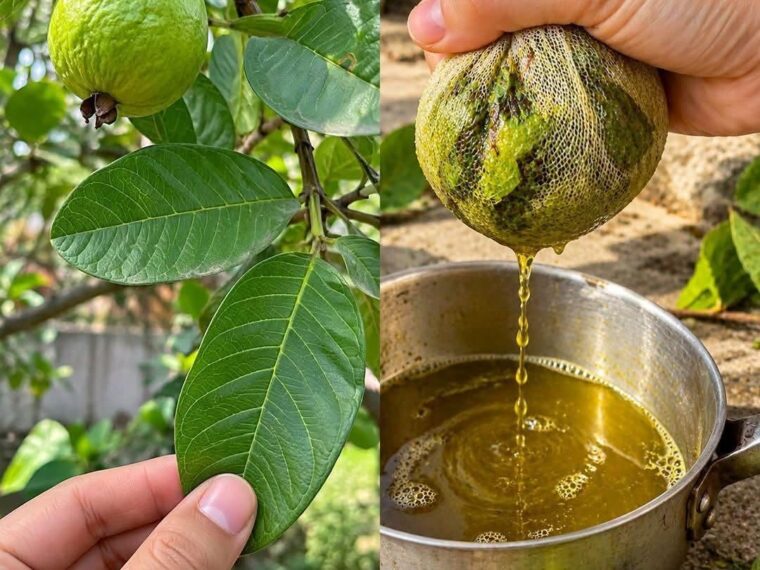
1. Clean and Prepare the Leaves
Inspect your guava leaves, discarding any with brown blemishes, insect damage, or yellow discoloration. Wash the healthy leaves under cold running water, rubbing the tops and undersides with your fingertips to remove surface dust.
Pat the leaves dry with a clean paper towel. Using your hands, tear each leaf in half or into thirds to break the cell edges. If using dried guava leaves, measure out 2 level tablespoons.
2. Bring Water to a Rolling Boil
Pour 4 cups of filtered water into a 2-quart stainless steel or ceramic-coated saucepan. Place the pan on the stove over medium-high heat (high thermal intensity).
Bring the water to a full, rolling boil (212°F / 100°C). If you are adding a cinnamon stick or sliced fresh ginger, drop them into the water now so they begin releasing their oils.
3. Add the Leaves and Drop the Heat (The Simmer Phase)
Once the water boils, drop the bruised fresh guava leaves (or dried leaves) directly into the bubbling water. Use a wooden spoon to submerge them completely.
Immediately drop the stove heat to low to medium-low (gentle intensity, approx. 185°F–190°F / 85°C–88°C). Place a snug-fitting lid on the saucepan. Allow the leaves to simmer gently for 10 minutes.
During this time, the water will gradually shift from clear to a delicate amber-gold or light olive-tea tone, releasing a grassy, soothing fragrance reminiscent of roasted green tea.
4. The Off-Heat Steep (Flavor Settling)
After 10 minutes of simmering, turn off the stovetop burner completely. Slide the pan off the warm burner, keeping the lid securely closed.
Allow the tea to sit undisturbed to steep in its own residual heat for 5 minutes. This rest window allows the tannins to settle and rounds out the flavor profile without extracting bitterness.
5. Strain and Clarify
Remove the lid. Set a fine-mesh stainless steel sieve over a heatproof glass pitcher or ceramic teapot.
Slowly pour the warm liquid through the strainer to catch all the spent leaves, ginger, and cinnamon. Discard the spent leaves in your compost bin.
6. Garnish and Serve
- To Serve Hot: Ladle the warm tea into ceramic mugs. Add a squeeze of fresh lemon juice (which will slightly lighten the amber hue) and stir in raw honey or maple syrup to taste if desired. Sip slowly between or after meals.
- To Serve Chilled (Iced Guava Cooler): Let the strained tea cool on your countertop for 20 minutes, then refrigerate for at least 2 hours. Pour over tall glasses packed with ice cubes, garnish with a fresh mint sprig and a lemon wheel, and enjoy as a cooling mid-afternoon beverage.
Versatile Recipe Variations
- Guava-Mint Digestive Cooler: Add 4 to 5 fresh spearmint or peppermint leaves during the final 5-minute off-heat steep. The cooling menthol balances the earthy leaf tones.
- Guava Green Tea Blend: Combine 1 tablespoon of dried guava leaves with 1 teaspoon of loose-leaf sencha or jasmine green tea during the steeping phase for an extra layer of floral aroma.
- Spiced Spiced Chai Style: Simmer crushed cardamom pods, whole cloves, and crushed black peppercorns along with the guava leaves, then finish with a splash of unsweetened almond milk or oat milk.
Storage, Make-Ahead & Preservation Guidelines
- Refrigeration: Store cooled tea in an airtight glass container (such as a sealed glass pitcher or mason jar) in the refrigerator for up to 4 days.
- Drying Fresh Leaves for Storage: If you have access to a guava tree with an abundant harvest, wash and thoroughly dry fresh leaves. Spread them in a single layer on a parchment-lined tray and dehydrate at 115°F (46°C) for 6 to 8 hours (or air-dry in a warm, well-ventilated room out of direct sunlight for 4 to 5 days) until crisp and brittle. Store whole dried leaves in an airtight glass jar away from light and heat for up to 12 months.
- Reheating: Warm individual mugs in a small saucepan over medium-low heat for 2 to 3 minutes until steaming. Avoid boiling the finished tea a second time.
Complete Nutritional Profile
Values below represent an estimated nutritional breakdown per standard 8 oz (240 ml) serving of unsweetened, brewed guava leaf tea.
| Nutrient | Amount per Serving (8 oz / 240 ml) | % Daily Value (DV) |
| Calories | 2 kcal | — |
| Total Fat | 0.0 g | 0% |
| Saturated Fat | 0.0 g | 0% |
| Trans Fat | 0.0 g | — |
| Cholesterol | 0 mg | 0% |
| Sodium | 2 mg | <1% |
| Total Carbohydrates | 0.5 g | <1% |
| Dietary Fiber | 0.1 g | <1% |
| Total Sugars | 0.0 g | — |
| Net Carbohydrates | 0.4 g | — |
| Protein | 0.1 g | <1% |
| Vitamin C | 4.2 mg | 5% |
| Calcium | 12 mg | 1% |
| Iron | 0.2 mg | 1% |
| Potassium | 45 mg | 1% |
| Caffeine | 0 mg (Naturally 100% Caffeine-Free) | — |
| Bioactive Phytochemicals | Quercetin, Catechins, Gallic Acid, Lycopene trace | — |