You’ve probably heard that you can place an egg in water to determine whether it’s fresh.
This test works because eggs gradually lose moisture over time, causing an air pocket inside the shell to grow.
Here’s what the results usually mean:
- Sinks and lies flat: Very fresh.
- Stands upright: Older but often still safe.
- Floats: Likely old enough that it should be discarded.
However, remember that the float test measures freshness—not food safety.
A contaminated egg may still sink.
What’s the Best Way to Store Eggs?
Proper storage is surprisingly simple.
For maximum freshness:
- Keep eggs refrigerated below 40°F (4°C).
- Leave them in their original carton.
- Store them on an interior refrigerator shelf instead of the door.
- Avoid frequent temperature changes.
- Keep them away from foods with strong odors, since eggs can absorb smells through their shells.
The refrigerator door may seem convenient, but it’s actually one of the warmest parts of the appliance because it’s opened so frequently.
How Long Do Eggs Last in the Refrigerator?
When stored correctly, fresh eggs generally remain safe for three to five weeks after purchase.
In many cases, they can still be perfectly usable even after the sell-by date printed on the carton.
The printed date often indicates peak quality rather than the exact point when eggs become unsafe.
Always inspect eggs before using them.
If they look and smell normal and have been refrigerated continuously, they’re often still good.
Can You Freeze Eggs?
Yes—but not in the shell.
Eggs expand when frozen, causing shells to crack.
Instead:
- Crack the eggs first.
- Beat the yolks and whites together.
- Store them in airtight freezer-safe containers.
- Label them with the freezing date.
Frozen eggs can maintain good quality for up to one year.
Are Brown Eggs Safer Than White Eggs?
No.
Shell color depends entirely on the breed of the chicken.
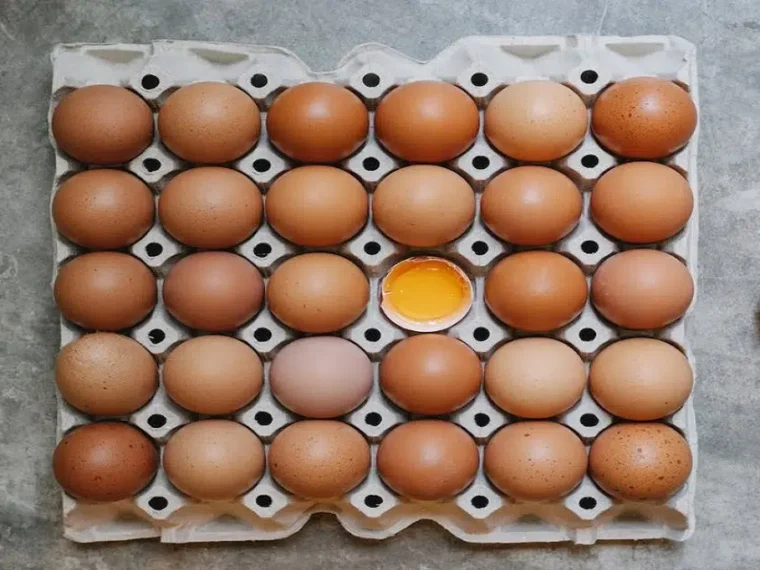
Brown, white, blue, and even green eggs all have essentially the same nutritional value and food safety requirements.
Color has nothing to do with freshness or bacterial contamination.
Should You Wash Eggs at Home?
If you’ve purchased refrigerated eggs from the grocery store, avoid washing them again.
Extra washing may actually spread bacteria or damage the shell’s protective surface.
If an egg has a small amount of dirt on it, gently wipe it immediately before using it rather than before storing it.
Tips to Reduce the Risk of Food Poisoning
Food safety starts with good kitchen habits.
Here are a few simple ways to protect yourself:
- Wash your hands before and after handling raw eggs.
- Clean bowls, utensils, and countertops thoroughly.
- Cook eggs until both the whites and yolks are firm unless using pasteurized eggs.
- Refrigerate leftovers promptly.
- Never taste raw batter containing uncooked eggs unless pasteurized eggs are used.
These habits help reduce the risk of salmonella and other foodborne illnesses.
Common Myths About Eggs
“If it smells fine, it’s safe.”
Not always.
Dangerous bacteria don’t always change an egg’s smell or appearance.
“Expiration dates tell you exactly when eggs go bad.”
Not necessarily.
Many eggs remain perfectly usable after the printed date if they’ve been refrigerated continuously.
“Room-temperature eggs are always unsafe.”
Not everywhere.
In several countries, commercially sold eggs aren’t washed and are commonly stored at room temperature because their natural protective coating remains intact. Local food safety recommendations should always be followed.
Frequently Asked Questions
Can I eat eggs left out overnight?
No. Refrigerated eggs left out overnight should be discarded, even if they look perfectly normal.
What if I accidentally left the carton on the counter?
If it has been less than two hours, return the eggs to the refrigerator immediately.
If more time has passed, especially in a warm room, it’s safest to throw them away.
Can cooking kill Salmonella?
Cooking eggs thoroughly greatly reduces the risk because high temperatures destroy Salmonella bacteria. However, prevention through proper storage is still essential.
Is it okay to use eggs past their sell-by date?
Yes, provided they’ve been refrigerated continuously, show no signs of spoilage, and still pass a visual and smell inspection.
The Bottom Line
Eggs are nutritious, affordable, and incredibly versatile, but they also deserve careful handling.
The simplest rule to remember is this: keep refrigerated eggs cold.
If they’ve been sitting on the counter for more than two hours—or one hour on a very hot day—it’s safest to discard them. Although throwing away food is never ideal, it’s a small price to pay compared with the risk of food poisoning.
By storing eggs correctly, keeping your refrigerator at 40°F (4°C) or below, practicing good kitchen hygiene, and cooking eggs thoroughly, you can continue enjoying one of nature’s most nutritious foods with confidence.
If you found this guide helpful, you may also enjoy learning how long hard-boiled eggs last in the refrigerator, why some hard-boiled eggs develop green yolks, and the safest way to freeze eggs for long-term storage.