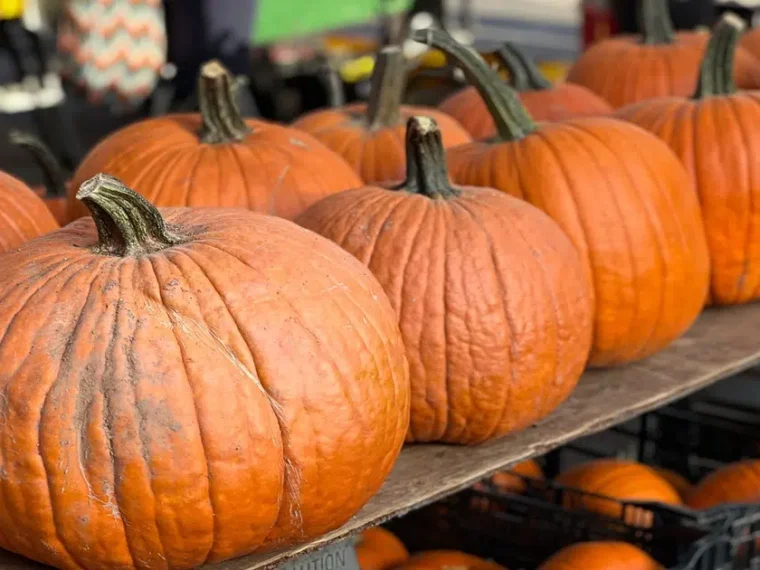
Botanically, a pumpkin is a fruit. In the kitchen, it gets treated like a vegetable. Both answers are correct, which is exactly why this argument never dies at the Thanksgiving table.
Here’s the part most people miss. The question of whether pumpkin is a fruit or vegetable isn’t really one question. It’s two systems answering two different things. Science looks at how the plant grows. Cooking looks at how the food tastes and what you do with it. Neither side is wrong. They’re just not talking about the same thing.
So let me pull the two camps apart, because once you see the split, the whole thing stops being confusing.
Why Botanists Call a Pumpkin a Fruit
To a botanist, a fruit has a specific definition. It’s the seed-bearing structure that develops from a flower’s ovary. That’s it. Sweetness has nothing to do with it.
Pumpkins check every box. They start as a flower on a sprawling vine. After the flower is pollinated, the base swells, and that swelling grows into the pumpkin you eventually carve or cook. Crack one open and you’ll find the giveaway: a cavity packed with seeds. Seeds inside, grown from a flower, so it qualifies as a fruit.
The funny thing is that this same rule catches a lot of foods we’d never call fruit. Tomatoes, cucumbers, bell peppers and squash are all botanically fruits for the exact same reason. They each grow from a flower and carry their seeds inside. If a pumpkin is a fruit, your salad is probably full of them too.
So scientifically, the label isn’t about whether something is sweet or savory. It’s about plant anatomy. And by that measure, a pumpkin is a fruit, no asterisk needed.
The Pepo: What Kind of Fruit a Pumpkin Really Is
If you want to get specific, a pumpkin is a cultivated winter squash in the genus Cucurbita. And the type of fruit it makes has an actual name: a pepo.
A pepo is a kind of berry. I know, that sounds like a stretch. But in botany, a berry is a fleshy fruit with seeds inside, and a pepo is the version with a hard rind, a fleshy interior, and lots of seeds. The tough outer shell is what sets it apart from a soft berry like a grape.
That shell is also why pumpkins and other winter squash store so well through the fall. It protects everything inside.
The pumpkin keeps good company here. Melons, cucumbers and gourds are all pepos too, all part of the same gourd family. So the next pumpkin you set on the porch is, technically, a giant berry with a crew cut of a rind.
Why the Kitchen Still Calls It a Vegetable
CONTINUE READING IN PAGE 2