There is a ridiculous number of options these days. Electric sharpeners if you are a push-a-button-and-be-done type of person. Ceramic pull-through sharpeners for quick touch-ups. Good old sharpening stones for the hands-on, meditative type. Honing rods which aren’t technically sharpeners but should still live on your counter.
Some people swear by a much odder fix sitting right in the bathroom cabinet – using toothpaste to sharpen a knife.
You should be using honing rods much more than you probably are, by the way. Honing rods don’t shave off metal—they merely realign the edge. After repeated use, the microscopic teeth on your knife begin to bend, twist, and misalign. So, to keep your knife functioning before it becomes dull, honing it a few times with a honing rod keeps that edge aligned and sharp.
Eventually, even with the most diligent honing of your knife, it will get dull. And that’s where sharpening comes in. This can mean literally pulling out a whetstone, settling in for twenty minutes of grinding zen, focusing on what you are sharpening, and being in the moment. Or this can mean plugging in an electric sharpener, letting it hum for fifteen seconds while you scroll through your videos. There is no wrong way to go about this, but you need to do it.
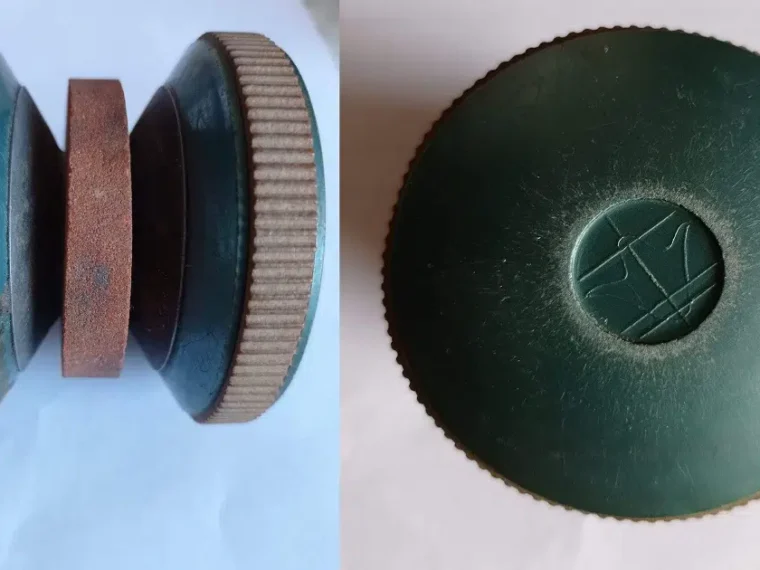
If you happen to come across one of those old sharpeners and are tempted to try it, go slow. Many of them are not fitted with guards, guides, or safety features. The stone itself may be worn down or uneven from years of use. But if you take care and maybe watch a YouTube tutorial, there is still life left in them.
That said, do not expect much from something that has been in the dark and rusting in a drawer for forty years. Also, always check how the blade feels afterward. If it feels weird, or rough, or worse than before, maybe it is time to upgrade to something a little more modern.
All that said, there is something slightly charming in using something old like that. Especially in a kitchen. You think about all the people that used it before you, all the meals it helped make, and all the people it fed.
At the end of the day, keeping your knives sharp is not just about performance. It is about safety. A sharp blade takes less pressure, which equals fewer accidents. Plus, a sharp knife cuts cleaner, which is better for food—which you may care about when slicing herbs or meats or bruisable fruits.
So whether you are sharpening with the thirty-year-old grinder your grandma used, or you have a super high-tech electric machine that sounds like a spaceship, just be sure you are sharpening your knives. Make it a routine, like wiping down the counters or rinsing out your coffee pot.
Because really, if there is one thing every kitchen needs, it is not a fancy blender or an air fryer or some twelve-speed food processor. It is a way to sharpen your knives.
And if it happens to come with a story? Bonus points.