
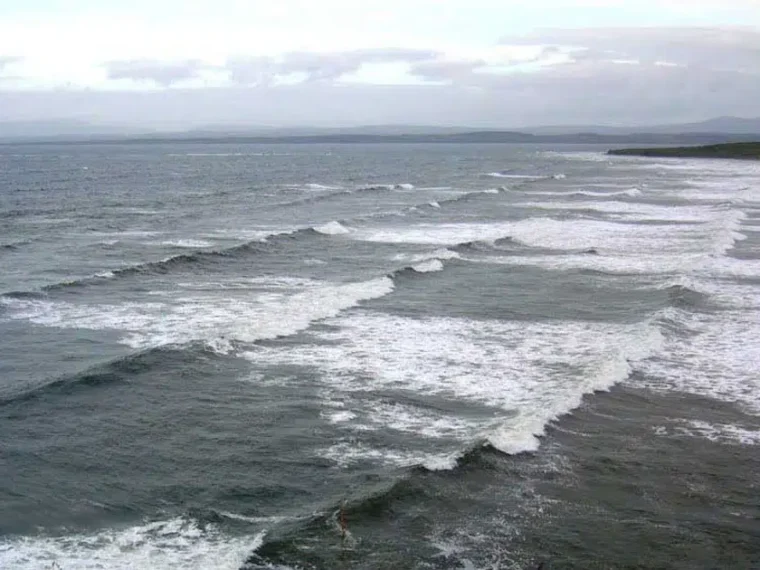
If you ever see square waves in the ocean, the most important thing is don’t go swimming. They can look fascinating, but the pattern can indicate two different wave systems crossing each other, creating a dangerous sea state.
What Are Square Waves?
Square waves, sometimes called a cross sea, happen when waves traveling in different directions intersect. Instead of producing the usual rows of waves moving roughly parallel to the shore, you can see a distinctive grid-like or checkerboard pattern on the water.
They’re especially noticeable from above, where the intersecting wave patterns become much easier to see.
Why Can Square Waves Be Dangerous?
The problem isn’t that the waves are literally forming perfect squares. It’s the crossing currents and wave systems that matter.
When waves from different directions meet, the water can become much more chaotic. Wave heights can vary rapidly, and conditions can be difficult for swimmers, surfers, and even boats.
A person swimming in calm-looking water might suddenly encounter stronger movement or be pushed in an unexpected direction.
What Should You Do If You See Them?
1. Stay Out of the Water
This is the biggest rule.
If you’re at a beach and notice a pronounced cross-sea pattern, don’t enter the ocean simply because the water looks beautiful or unusual.
If you’re already swimming, head toward shore calmly if you can do so safely.
2. Pay Attention to Warnings
Look for beach safety signs, flags, lifeguard instructions, and local weather or marine warnings.
A strange-looking sea isn’t something to challenge just for the experience.
3. Don’t Assume Calm Water Means Safe Water
One of the deceptive things about cross seas is that the surface can look mesmerizing rather than obviously stormy.
Ocean conditions can change quickly, particularly when different swell systems are interacting.
4. Keep Children Away From the Water
If you’re visiting the beach with children, keep them well away from the surf when conditions appear unusual. Children can be particularly vulnerable to unexpected waves and currents.
5. If You’re on a Boat
If you encounter a cross sea while boating, follow the vessel’s safety procedures and the advice of local maritime authorities. Don’t deliberately steer into increasingly rough conditions simply to get a closer look.
Are Square Waves the Same as Rip Currents?
continue reading in page 2