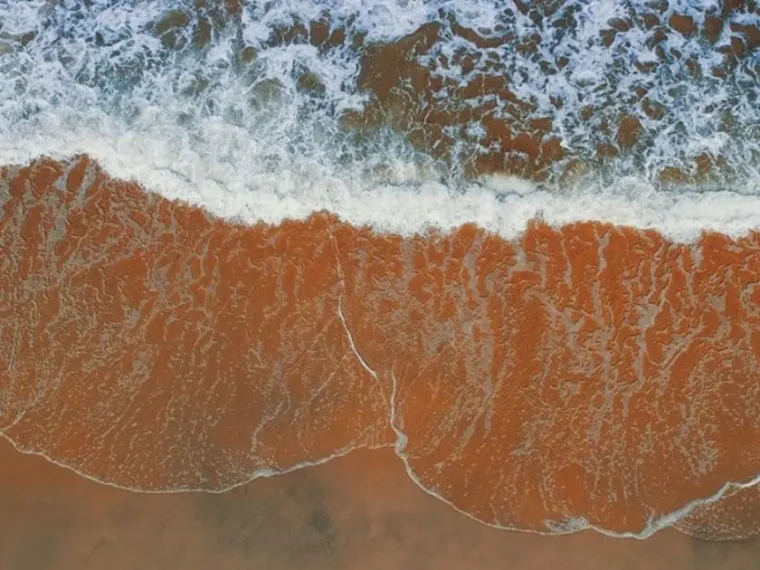
Staying safe is mostly common sense once you know the signs. On that first trip, once my throat kept tickling and I clocked the dead fish, I packed up and moved us to a spot a few miles up the coast where the water ran clear. Best call I made all weekend.
Here’s the short checklist I run through now:
- Stay out of discolored water, and steer well clear of any area with dead fish washing up.
- Check local beach advisories or state HAB pages before you go, and again when you arrive.
- Don’t harvest or eat shellfish from affected waters, and skip fishing there too.
- Rinse off with clean water if you do get splashed or wade in by accident.
- If your throat or eyes start acting up near the surf, move upwind or back from the water.
Dogs need their own rule set, because they’ll happily drink seawater and roll in a dead fish given the chance. Keep pets away from the water and off the tideline. Don’t let them drink it, and if they get wet, rinse them and stop them from licking their fur until they’re clean. If you’re already thinking through the details of a low-stress trip with kids and pets, a few hacks for a smooth beach day pair nicely with a quick water check.
What to Check Before You Head to the Beach
Blooms come and go, sometimes over a matter of days, so the water that looked awful yesterday can be fine tomorrow and the reverse is just as true. Before you load the car, glance at your state or local HAB status and beach advisory page. It takes two minutes and saves the six-hour-drive heartbreak. While checking the shoreline, remember to avoid suspiciously calm spots with no breaking waves, since they may indicate a dangerous rip current.
Then do what I do the second I reach the sand: look at the water color and scan the tideline for fish. Those two glances tell you almost everything you need before anyone’s toes get wet.
Beach flags can also warn you about changing water conditions, so make sure you know what a purple flag at the beach means before heading into the surf.
FAQ
Is It Safe to Swim During a Red Tide?
Better to skip it. Avoid discolored water and any stretch with dead fish, since contact can irritate your skin and eyes and the airborne toxins near the surf can leave you coughing. If the water looks off or a local advisory is up, find a clear beach instead of chancing it.
Can You Eat Fish or Shellfish Caught During Red Tide?
Toxins concentrate in shellfish that filter the water, so they can be unsafe to eat during a bloom even when they look and smell normal. Follow any local harvesting closures to the letter, and when in doubt, don’t eat what you pulled from affected water.
How Long Does a Red Tide Last?
It varies a lot. Some blooms fade in a few days, while others linger for weeks or even months depending on water temperature, nutrients, and how calm the conditions stay. Because it shifts so quickly, always check current conditions rather than assuming last week’s report still holds.
Is Red Tide Safe for Dogs?
No, and dogs need extra watching because they’ll drink seawater or investigate dead fish without a second thought. Keep them off the affected water and tideline, don’t let them drink it, and rinse them off afterward so they can’t lick toxins from their fur.