
All homeowners will inevitably have to deal with a plumbing problem or two in their lifetime. Some are relatively harmless, such as a toilet that takes a little longer than usual to drain, while others can turn into expensive headaches if they’re ignored for too long.
As a homeowner myself, my least favorite plumbing issues are the ones involving the toilet. There is something particularly unpleasant about flushing and realizing that the water is draining far more slowly than it should. Then comes the gurgling sound, the occasional unpleasant odor, or that uncomfortable feeling that something is not quite right beneath the floor.
One possible explanation is a blockage somewhere in the drainage system. And surprisingly, in some homes, the culprit can be found outside rather than inside the bathroom.
Tree roots.
As trees and shrubs grow, their roots naturally search for water and nutrients. If they encounter tiny cracks or loose joints in underground plumbing pipes, they can gradually work their way inside. Over time, those roots can become larger and create a serious obstruction.
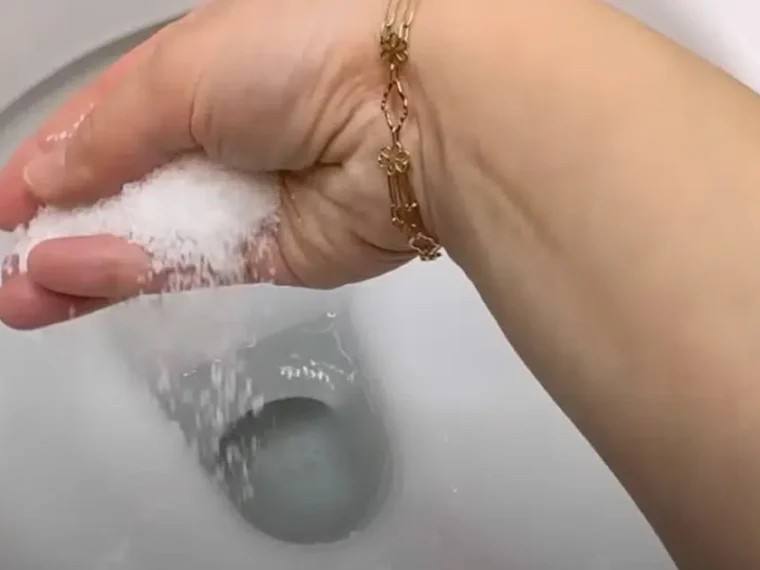
That’s where the unusual household tip of putting salt in the toilet comes from.
But does it actually work? And is pouring salt down your toilet really a good idea?


Why Tree Roots Can Become a Plumbing Nightmare
Tree roots are surprisingly persistent.
Underground pipes can contain tiny amounts of moisture, particularly around joints, cracks, or damaged sections. Roots naturally grow toward sources of water, so even a very small opening can eventually become an entry point.
Once a root finds its way inside, it doesn’t necessarily stop growing.
The root can expand and branch out inside the pipe, catching toilet paper, hair, grease, dirt, and other debris as wastewater passes through. What begins as a tiny intrusion can gradually develop into a substantial blockage.
This is why a plumbing problem caused by roots can seem to appear out of nowhere.
One day your toilet works normally. Weeks or months later, you may notice that the water takes longer to disappear after flushing.
Then the symptoms become increasingly obvious.
What Are the Warning Signs?
continue reading in page 2